Ellis Koch · 20 September 2026
Analyzing Altitude-Based Adaptations in Scent Profiles of Alpine Flora Varieties
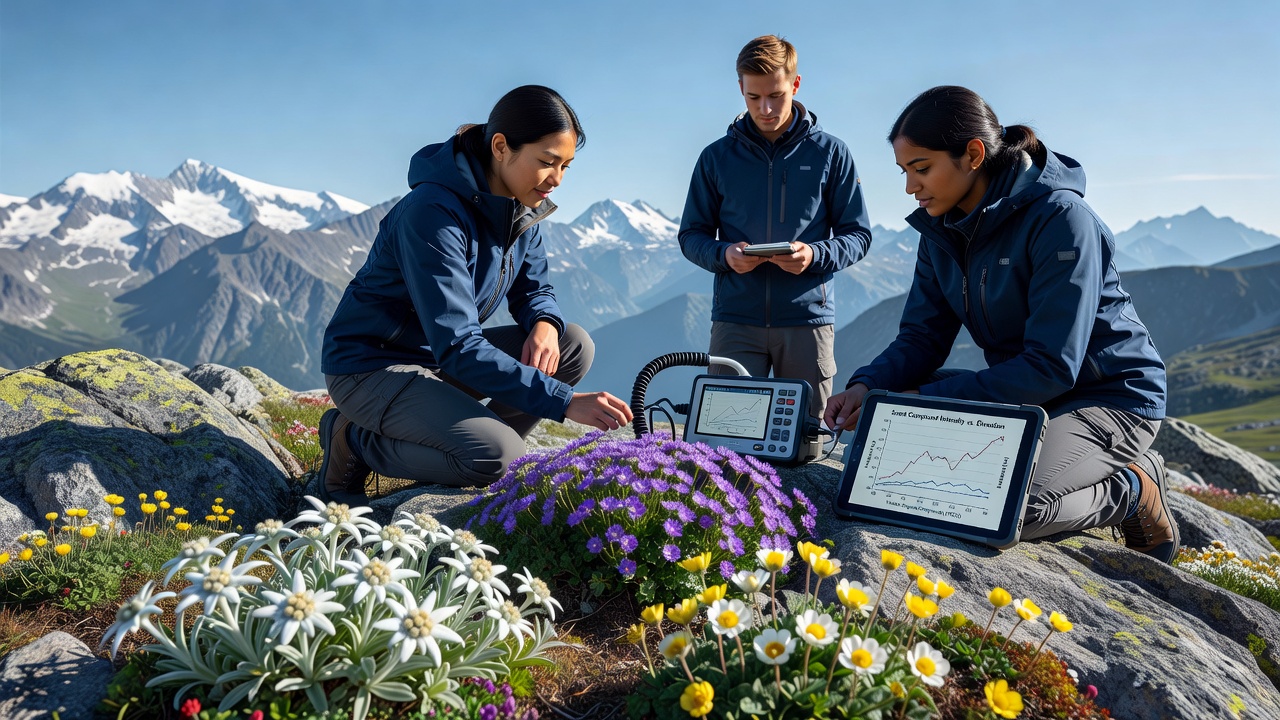
Alpine flora varieties grow across steep elevation gradients where cooler temperatures, thinner air, and stronger ultraviolet exposure shape their development, and researchers track how these conditions alter the volatile organic compounds that create distinct scent profiles in species such as edelweiss, alpine roses, and gentians. Studies show that plants at higher altitudes often increase production of certain terpenes and phenylpropanoids while reducing others, creating measurable shifts in aroma compounds that serve functions in pollinator attraction and stress protection.
Environmental Factors Driving Scent Changes
Lower oxygen levels and greater diurnal temperature swings at elevations above 2000 meters prompt metabolic adjustments in alpine plants, and data collected from field stations in the European Alps and Canadian Rockies indicate that these conditions lead to elevated levels of monoterpenes like linalool and beta-pinene in many species. Observers note that ultraviolet intensity rises roughly 10 percent with every 1000-meter gain in altitude, prompting synthesis of protective flavonoids that also influence the overall scent bouquet through interactions with existing volatiles. Soil composition and snowmelt timing further modify nutrient availability, which in turn affects the enzymatic pathways responsible for scent molecule formation during the growing season.
Analytical Techniques Used in Research
Scientists apply gas chromatography-mass spectrometry combined with headspace sampling to capture and quantify scent volatiles directly from flowers and leaves at different sites, allowing precise comparison of compound ratios across elevation bands. Portable proton-transfer-reaction mass spectrometers enable real-time measurements during expeditions, and researchers have documented consistent increases in oxygenated sesquiterpenes at higher sites where oxidative stress is more pronounced. Controlled chamber experiments replicate altitude conditions by adjusting pressure and light spectra, confirming that temperature gradients alone can shift scent profiles even when genetic material remains identical.
Regional Patterns and Species Examples
In the Swiss National Park, analyses of Campanula species reveal higher concentrations of benzyl alcohol at 2500 meters compared with lower meadows, whereas populations of the same species in the Australian Alps show parallel trends in methyl salicylate production. Researchers working in September 2026 reported expanded datasets from the Rocky Mountain Biological Laboratory that tracked seasonal scent evolution in 12 alpine taxa, revealing that peak volatile emission occurs two weeks earlier at upper elevations due to compressed growing seasons. These findings align with earlier work conducted by teams from Environment and Climate Change Canada, which documented similar compression effects in subarctic alpine zones.
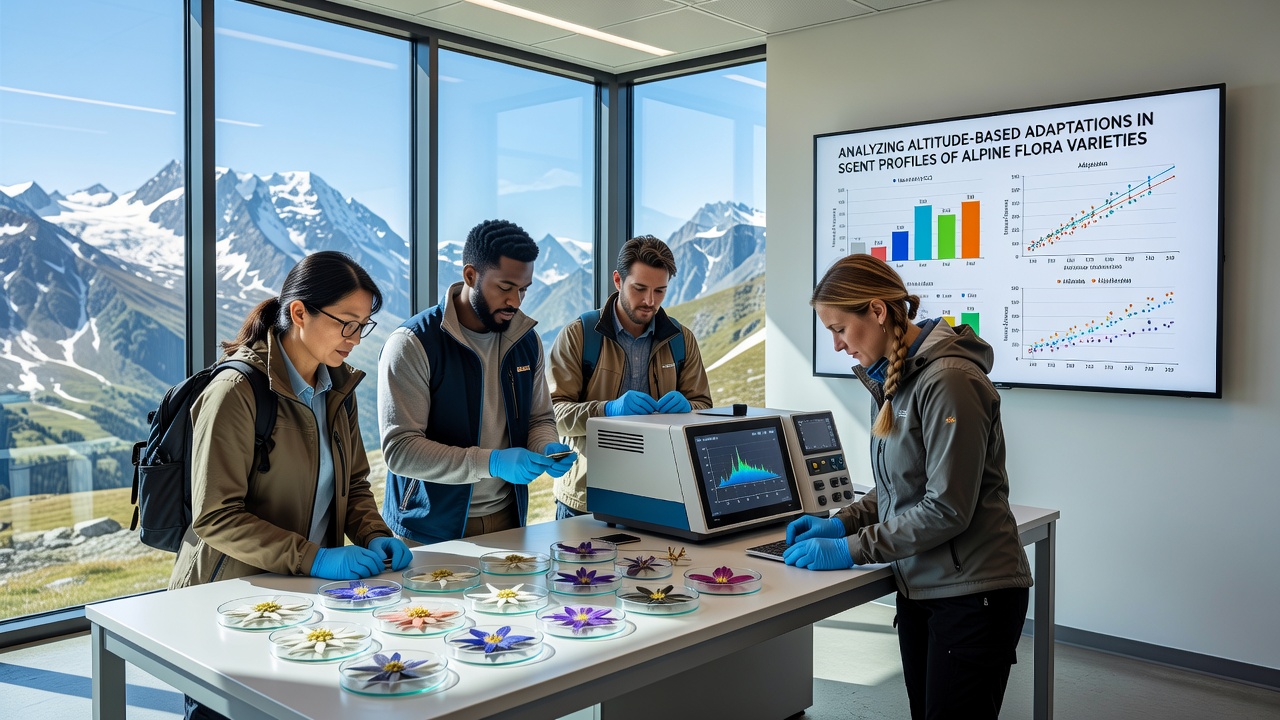
Hybridization events between closely related alpine varieties can introduce novel scent combinations that researchers monitor through repeated sampling transects, and evidence from long-term plots shows that such hybrids sometimes exhibit intermediate volatile profiles that vary predictably with elevation. Pollinator preference studies conducted in tandem with chemical analyses indicate that certain bees and flies respond more strongly to the altered scent mixtures found at higher sites, suggesting an ecological feedback loop that reinforces local adaptation.
Data Interpretation and Broader Implications
Statistical models applied to multi-year datasets demonstrate that altitude explains up to 45 percent of variance in key monoterpene ratios after controlling for genetic lineage and soil pH, according to findings released by the International Alpine Research Network. Those models also highlight interactions between altitude and precipitation patterns that can either amplify or dampen scent shifts depending on regional climate trends. Conservation programs now incorporate scent profile monitoring as one indicator of population health, because changes in volatile output may signal stress before visible morphological alterations appear.
Continued refinement of sampling protocols and expansion of reference libraries for alpine volatiles support more accurate cross-site comparisons, and collaborative databases maintained by institutions in multiple countries facilitate this work. Ongoing projects scheduled through 2027 aim to integrate remote sensing of vegetation indices with ground-based scent measurements to scale findings across entire mountain ranges.
Conclusion
Altitude-based adaptations in scent profiles of alpine flora varieties reflect integrated responses to temperature, radiation, and atmospheric pressure that researchers quantify through standardized chemical analyses and field experiments. Data from diverse mountain regions continue to reveal consistent patterns in volatile compound shifts, providing a foundation for understanding how these plants maintain ecological roles under changing environmental conditions. Future monitoring efforts will build on existing datasets to track long-term trends across elevation gradients.