Elena Wolf · 4 October 2026
How Volcanic Soil Influences Terpene Development in Isolated High-Mountain Bloom Species
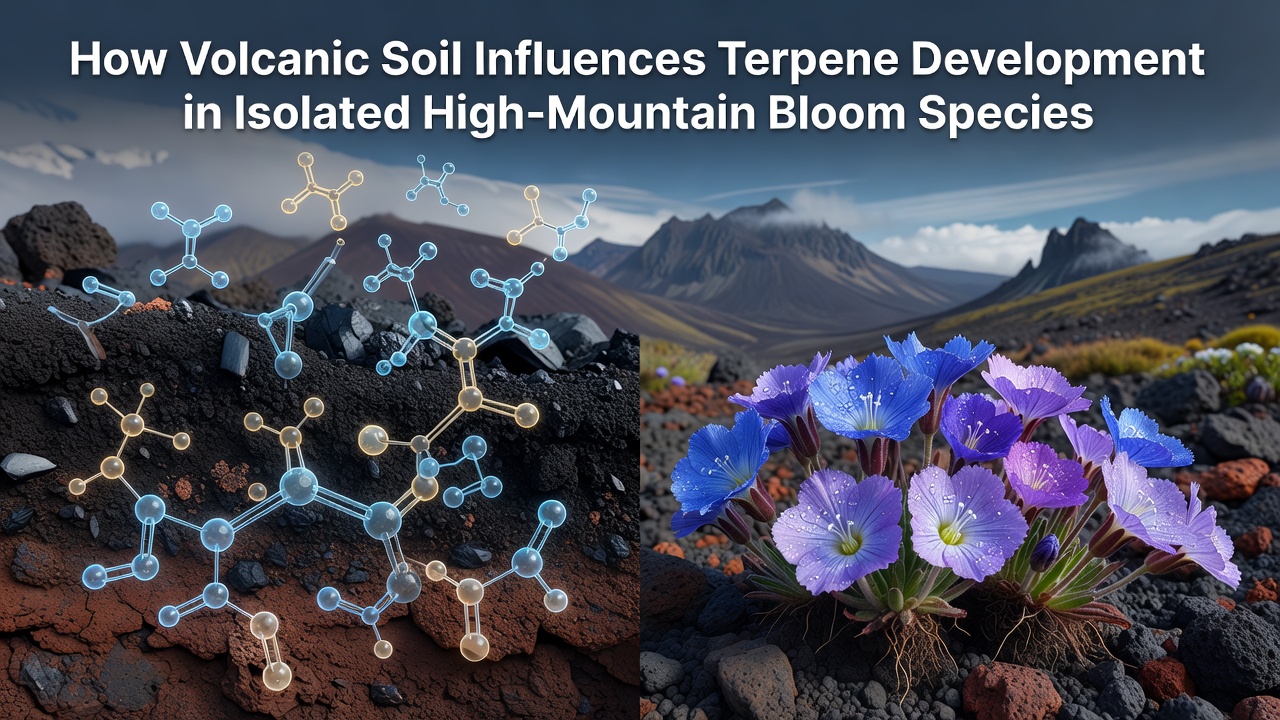
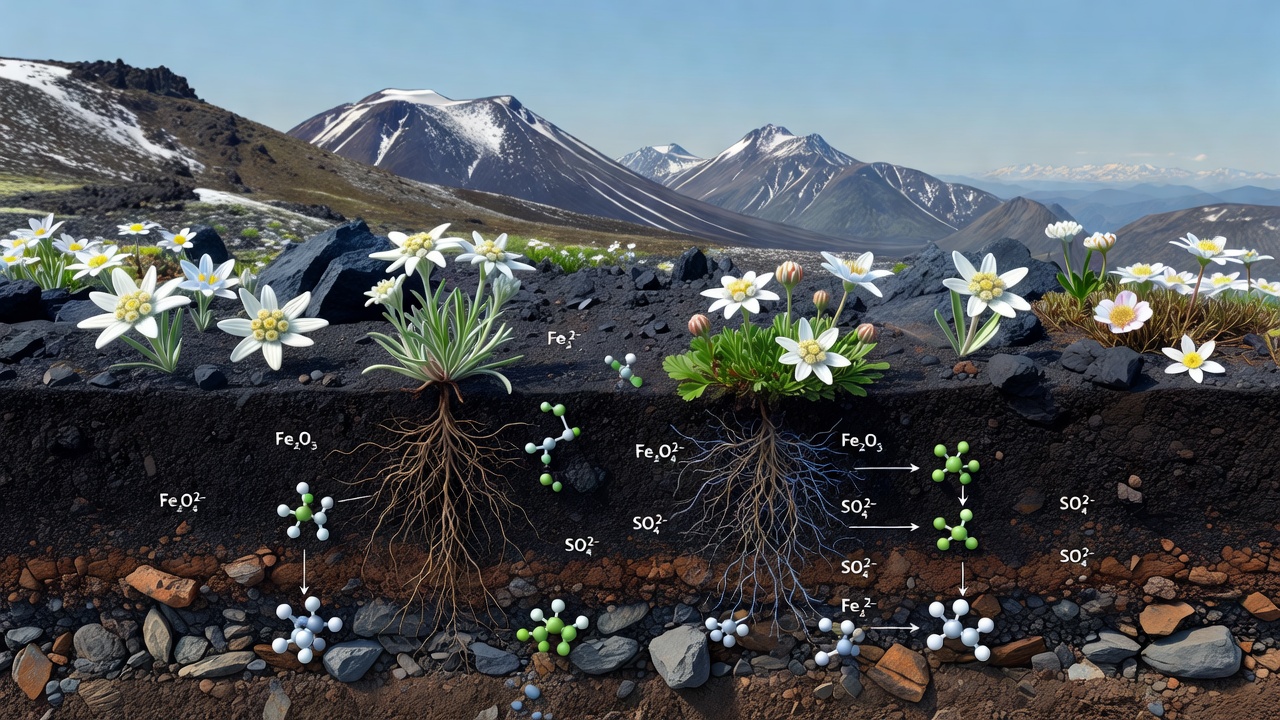
Volcanic soil forms through the weathering of lava and ash deposits, creating substrates that contain elevated levels of potassium, phosphorus, magnesium and trace metals such as zinc and manganese. These elements reach plant roots in concentrations that differ markedly from those found in granitic or sedimentary soils at similar elevations. Researchers tracking nutrient uptake in isolated high-mountain populations note that the extra mineral availability alters the metabolic pathways responsible for terpene synthesis, particularly the methylerythritol phosphate route that supplies precursors for monoterpenes and sesquiterpenes.
Mineral Profiles Unique to Volcanic Deposits
Basaltic and andesitic parent materials release cations gradually over centuries, maintaining steady supplies of bioavailable nutrients even after surface organic matter has accumulated. Studies conducted on slopes surrounding active and dormant volcanoes document potassium levels often exceeding 2 percent by weight in the top 30 centimeters of soil, while comparable alpine sites on non-volcanic bedrock rarely surpass 0.8 percent. Phosphorus follows a similar pattern because apatite crystals within volcanic ash weather more readily than apatite locked inside older sedimentary rocks. Observers note that these sustained nutrient fluxes coincide with measurable shifts in the terpene profiles of bloom species that have remained geographically isolated for thousands of years.
Terpene Biosynthesis Under Elevated Nutrient Regimes
Terpene production begins with the condensation of isopentenyl diphosphate and dimethylallyl diphosphate units inside plastids and cytosol. When potassium and magnesium concentrations rise, enzymes such as 1-deoxy-D-xylulose-5-phosphate synthase exhibit higher turnover rates, increasing the pool of available precursors. Trace metals including manganese act as cofactors for terpene synthases, further directing carbon flow toward specific cyclic and acyclic compounds. Data collected from paired plots on volcanic versus non-volcanic substrates show that certain monoterpenes, including limonene and beta-pinene, increase by 30 to 45 percent in plants rooted in volcanic material, whereas other species produce elevated levels of oxygenated derivatives such as linalool.
Altitude and Isolation Effects on Chemical Expression
High-mountain environments impose additional selective pressures through intense ultraviolet radiation, rapid temperature fluctuations and shortened growing seasons. Isolated populations often evolve restricted gene flow, allowing local soil chemistry to shape terpene composition without extensive hybridization. Field sampling in October 2026 across several cordilleran ranges revealed that bloom species restricted to volcanic peaks displayed distinct chemotypes compared with conspecifics on nearby non-volcanic ridges, even when both groups experienced identical photoperiod and temperature regimes. The geographic separation appears to preserve these chemical differences across multiple generations.
Researchers have documented comparable patterns in regions where volcanic activity spans wide elevation gradients. In one long-term monitoring project, plants growing above 3,200 meters on ash-derived soils consistently produced higher total terpene concentrations than plants of the same species established on limestone-derived soils at equivalent altitudes. The difference persists after transplantation experiments that equalize light and water availability, pointing to soil mineralogy as the dominant variable.
Case Examples from Distinct Volcanic Regions
Populations of certain high-elevation Asteraceae on the slopes of stratovolcanoes in the Cascade Range demonstrate elevated sesquiterpene lactone content when rooted in recent tephra deposits. Parallel observations from high plateaus in East Africa indicate that species restricted to the flanks of shield volcanoes accumulate greater quantities of monoterpene alcohols than their counterparts on surrounding crystalline basement rocks. In both regions, the same mineral enrichment patterns recur: potassium and phosphorus availability track with terpene concentration increases of similar magnitude. These parallel outcomes suggest that the underlying mechanism operates across taxonomically distant lineages whenever volcanic substrates dominate the rooting zone.
Analytical Methods and Data Collection
Gas chromatography-mass spectrometry remains the standard technique for quantifying individual terpenes, while inductively coupled plasma optical emission spectroscopy provides precise soil nutrient profiles. Researchers combine these datasets with geospatial modeling to isolate the contribution of soil chemistry from confounding variables such as slope aspect and snowmelt timing. Recent protocols incorporate stable-isotope labeling of soil minerals to trace direct incorporation into terpene skeletons, confirming that potassium and magnesium supplied by volcanic weathering participate in the enzymatic reactions that determine final terpene structure.
Conclusion
Volcanic soil supplies a distinctive mineral matrix that modulates the enzymatic steps leading to terpene formation in isolated high-mountain bloom species. Sustained availability of potassium, phosphorus and selected trace metals correlates with elevated concentrations of specific monoterpenes and sesquiterpenes across multiple volcanic provinces. Geographic isolation preserves these chemical signatures, allowing researchers to document consistent patterns even when climatic variables are held constant. Continued monitoring through coordinated field networks will clarify how ongoing volcanic activity and changing atmospheric conditions interact with these established soil-plant relationships.